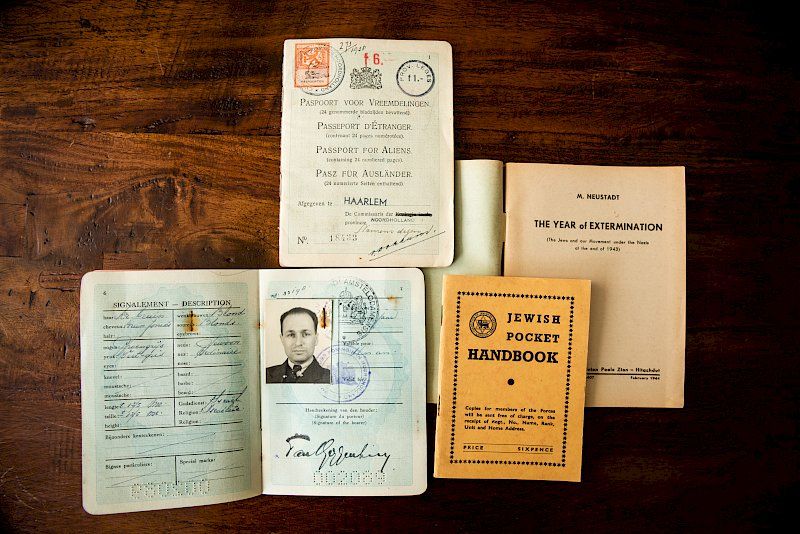
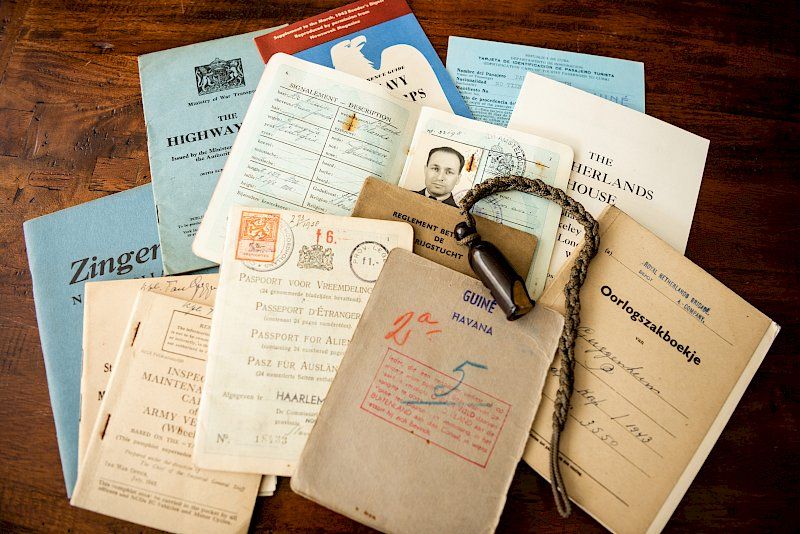
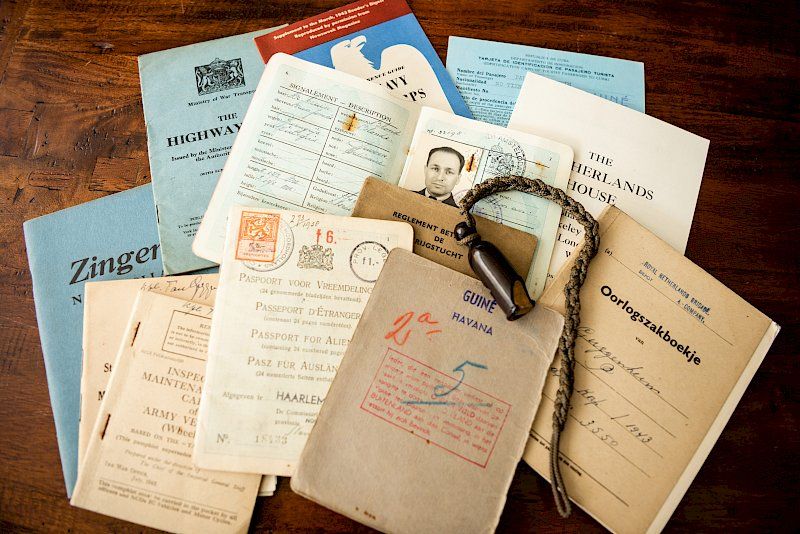
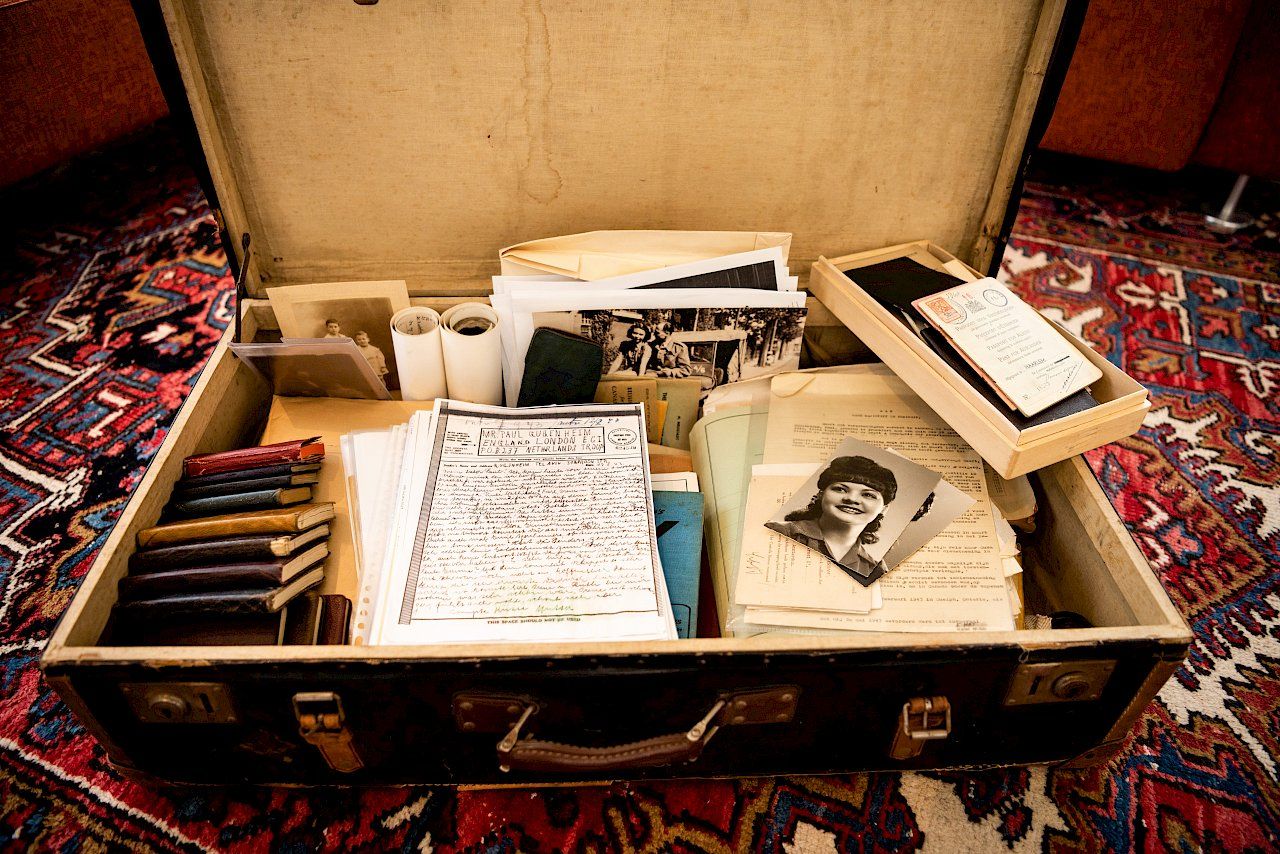
Between January 1942 and 1945 Paul Guggenheim crossed an ocean twice and lived under four flags, none of which was his own. Turn the globe, or choose a stop, to follow him — the filled marks are places he lived; the open marks are where the letters came from.
Stop 01 of 17
The stops, in text
Between January 1942 and 1945 Paul Guggenheim crossed an ocean twice and lived under four flags, none of which was his own. Turn the globe, or choose a stop, to follow him — the filled marks are places he lived; the open marks are where the letters came from.
1. Amsterdam
Until 30 January 1942 · Departure
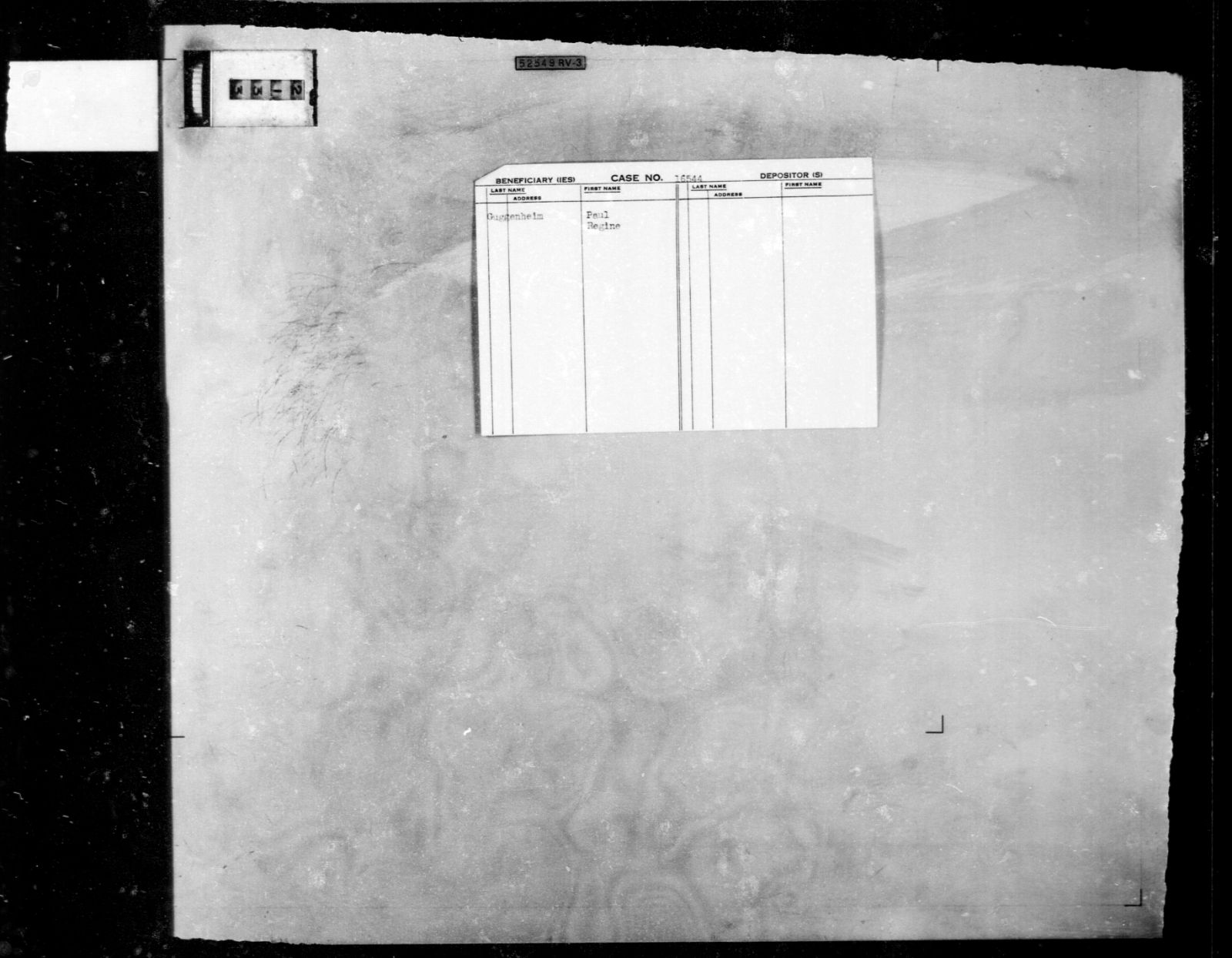
Twice they had been refused permission to leave. In the autumn of 1941 Paul went to a former colleague from the Delft paint works and handed him an envelope with fl. 5,000, promising double if an exit permit came. Weeks later the Gestapo agreed — on condition that everything they owned, the business shares, the furniture, the life insurance, was signed over to the Lippmann, Rosenthal bank. They left on 30 January 1942.
So we had to transfer all things of value … at the favour of the Bank Lipman & Rosenthal at Amsterdam.
Written in English by Paul himself.
2. Paris
30 – 31 January 1942 · In transit
Two days across occupied France. Paul’s own account to the War Minister compresses it into a single line: he left Amsterdam on 30 January and “reached the Spanish border on 1 February 1942.” Nothing else from these days was kept.
3. Hendaye
1 February 1942 · The frontier
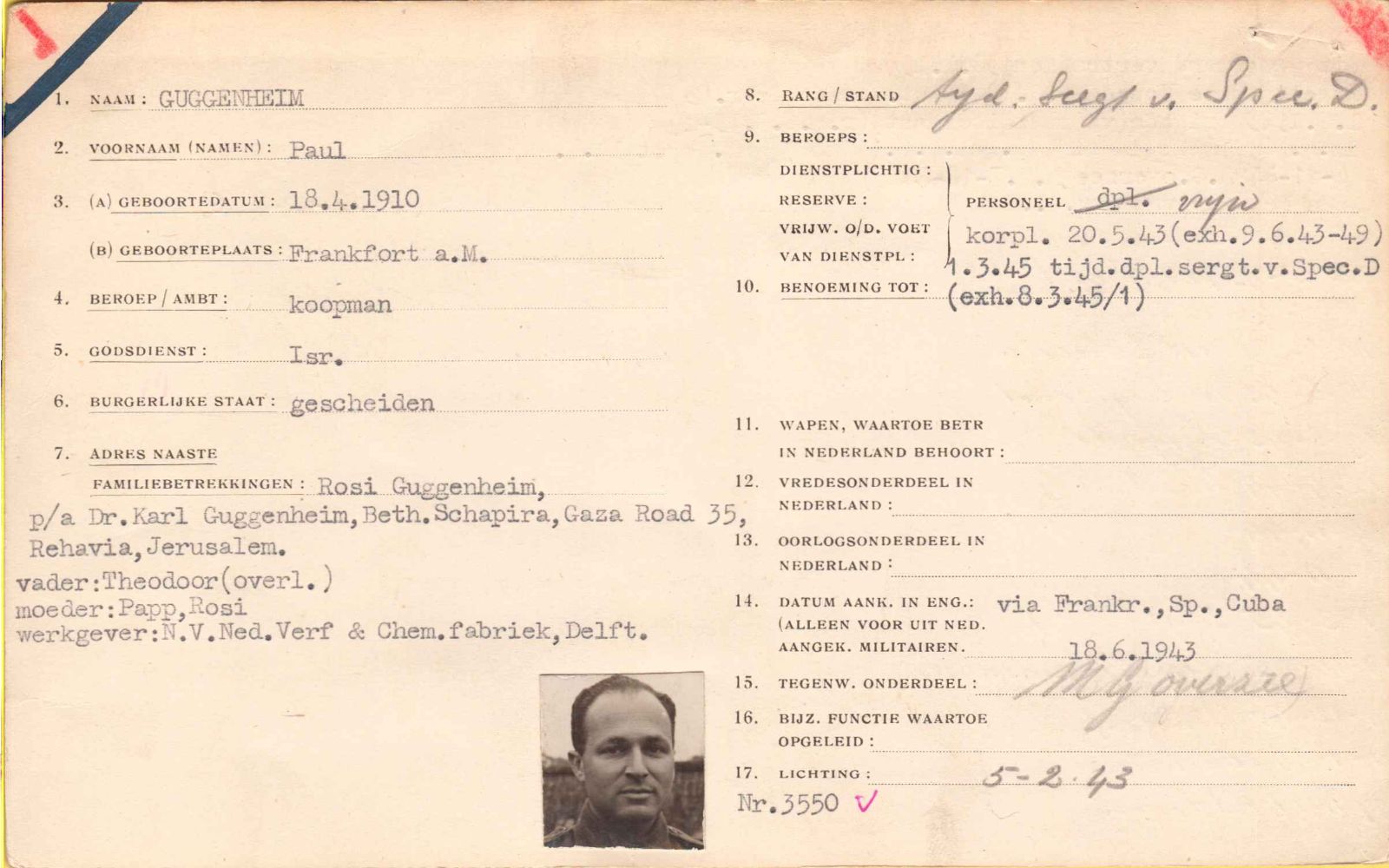
The frontier on the Bidasoa, where German-controlled France ended and Franco’s Spain began — the date he gave the ministry, 1 February 1942, is the only record of the crossing. On his army card it is three words: “via Frankr., Sp., Cuba.”
4. Bilbao
February 1942 · In transit
From Bilbao they hired a car to drive the length of the north coast to Vigo, to be in time for a ship due to sail on 7 February 1942. They made it. The ship did not.
5. Vigo
February – March 1942 · Port of embarkation
The sailing was postponed “for an indefinite time” and they waited a month. Paul fell ill here; by August he had lost thirteen pounds “since Vigo”. It was also here that Regine first spoke of divorce — he dismissed it at the time. On 9 March they took the train to Lisbon.
6. Lisbon
March – April 1942 · The last European port
On 11 March 1942, two days after arriving, Paul presented himself to the Dutch consul to enlist. He was told to go to Cuba first. Regine insisted on the Hotel Métropol, the most expensive in town; later he wrote that he and their friends could not understand “how she raged in Lisbon”.
wie sie in Lissabon tobte, um im teuersten Hotel Métropol zu wohnen
how she raged in Lisbon to stay in the most expensive Hotel Métropol
7. Tiscornia
9 April – early November 1942 · Internment camp
Seven months behind the wire outside Havana. The marriage broke here: on 24 July he wrote to his parents-in-law that he felt “wahnsinnig down u kaput”. The Dutch internees sang their own song about it, to a popular tune — soup with rice at noon, rice with soup at night, and never any water in the showers.
Ich wollte, ich würde irgendwo sitzen u arbeiten, einerlei wo… dann würde ich wohl eher über alles hinwegkommen.
I wish I could sit somewhere and work, no matter where… then I would probably get over everything more easily.
8. Havana
November 1942 – 1 February 1943 · Released, stateless
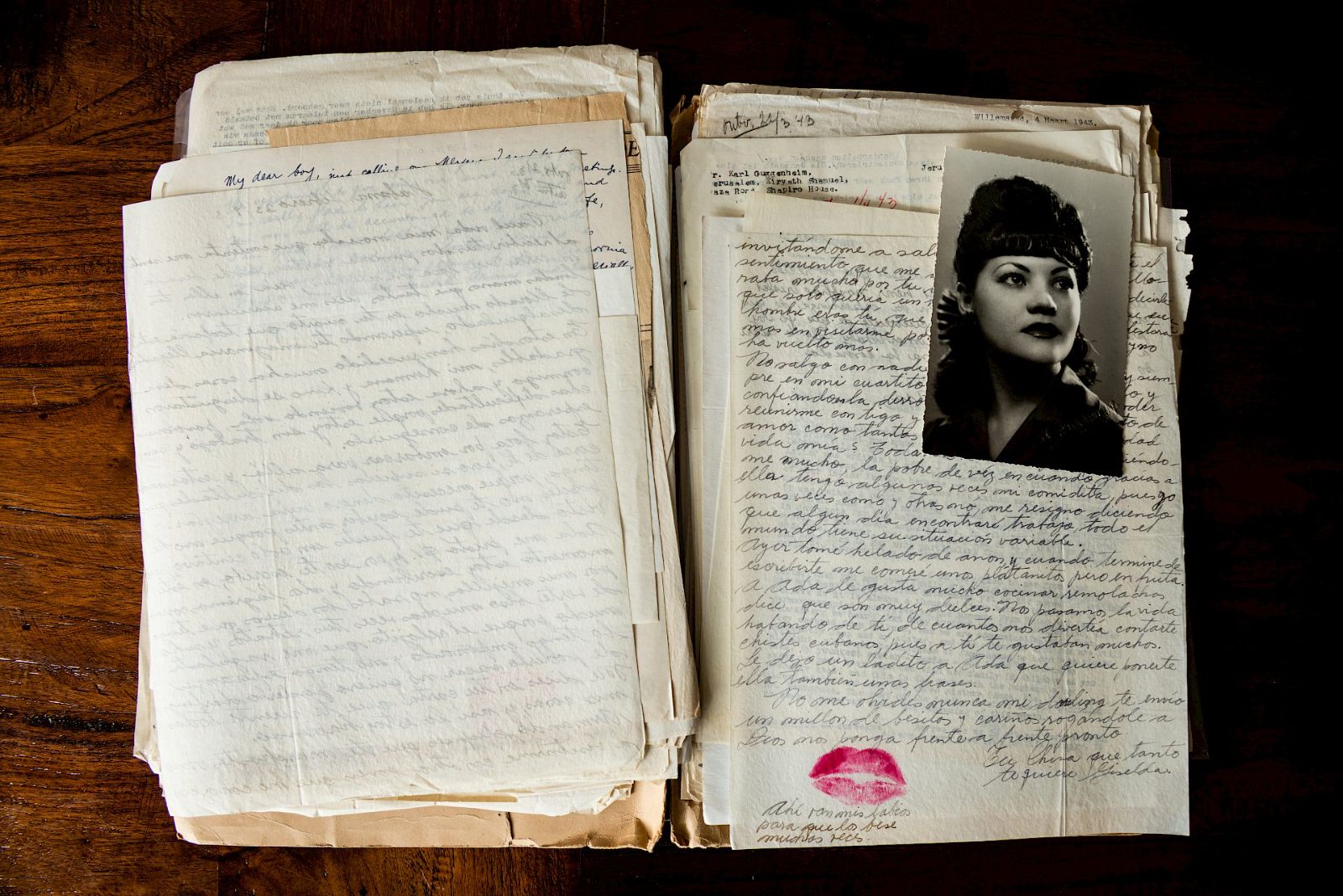
Released at the start of November into a city where everything was green in December and the shops were full. He lodged in a Cuban house, read the papers in Spanish, met Giselda Blanco — and volunteered for the Dutch army: “I no longer feel it merely as my duty; as a Jew I have the duty.” He sailed on 1 February 1943.
Ahí van mis labios para que los bese muchas veces.
There go my lips, so that you may kiss them many times.
9. New York
February 1943 · In transit
North from Cuba to the Dutch training camp in Canada — he left Havana on 1 February 1943 and was in Ontario four days later. The crossing of the United States, the country whose affidavits he had waited for in vain, lasted barely a day or two.
10. Guelph, Ontario
5 February – 10 June 1943 · Juliana Barracks
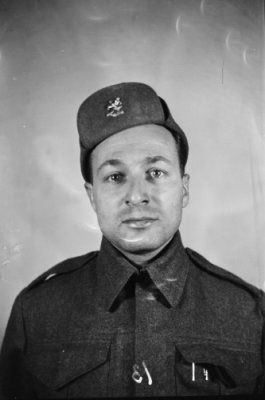
Sworn in as a soldier at Juliana Barracks on 5 February 1943, made corporal on 20 May. In April he wrote to the War Minister asking to be repaid what the road to enlist had cost him: $800 passage, $330 for his keep in Tiscornia, $275 for the Cuban visa — $1,605 in all. He left Canada on 10 June.
Reiskosten Portugal – Cuba … Am.$ 800.—
Travel costs Portugal–Cuba: US $800.
11. Wrottesley Park
June 1943 – November 1944 · Radio, then Military Government
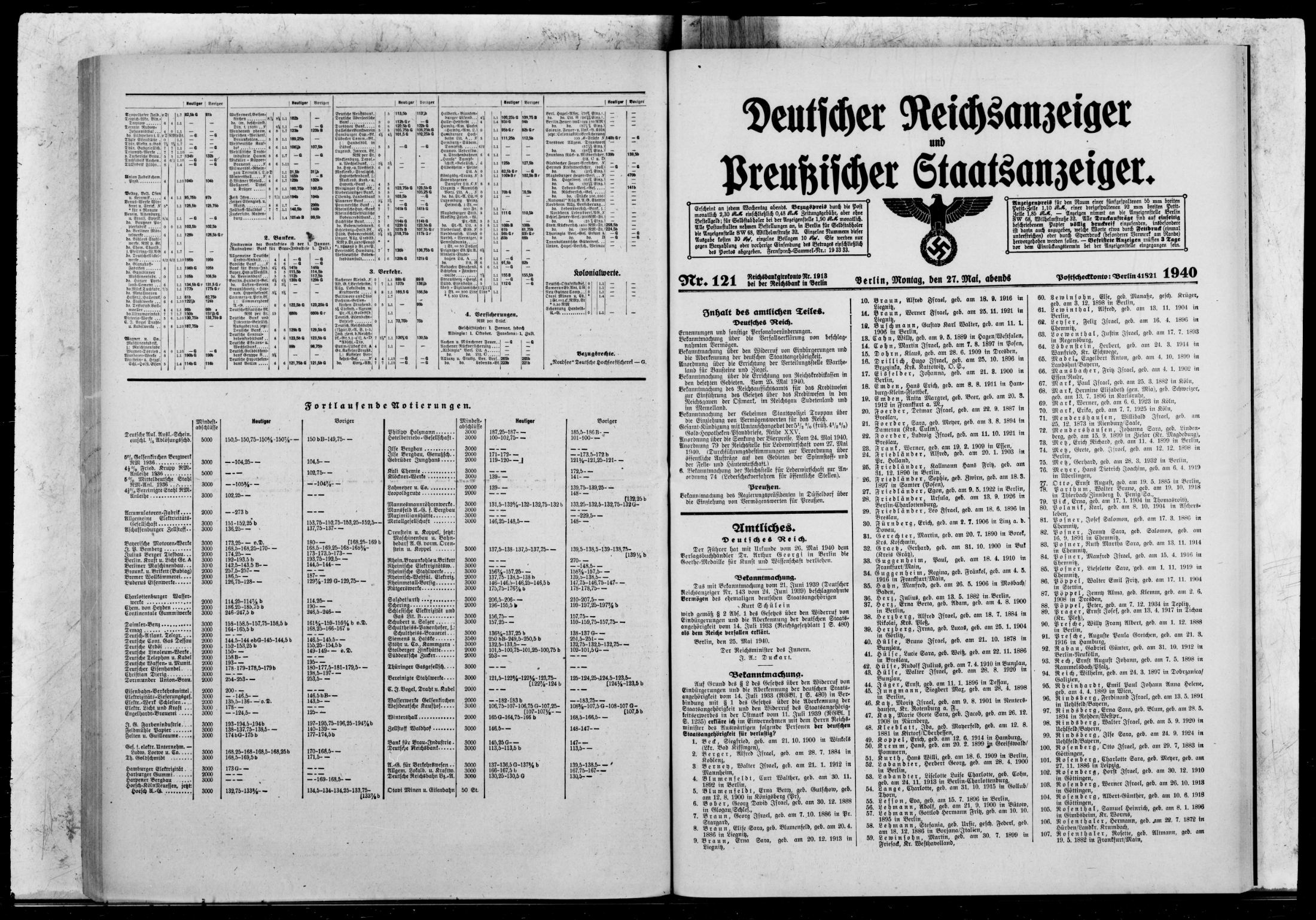
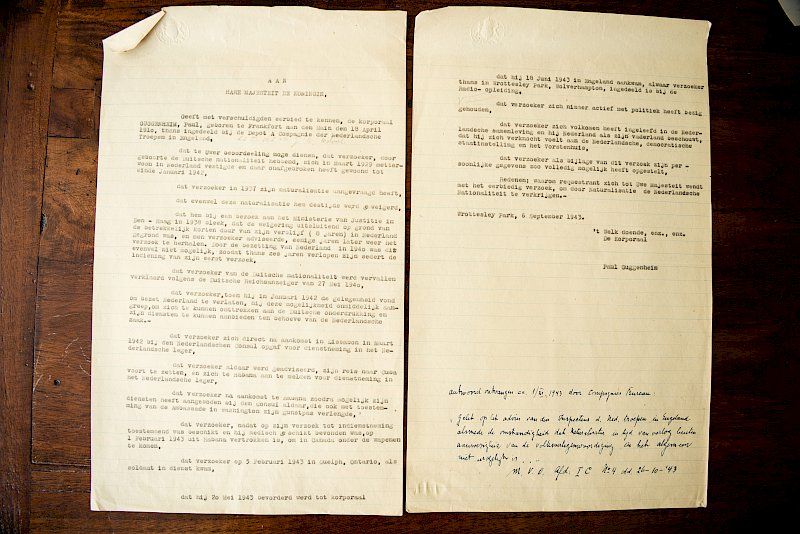
In England from 18 June 1943, a telegraphist in the Brigade’s radio section, later posted to the Military Government detachment. He petitioned twice to be made Dutch: on 6 September 1943 (refused on 26 October) and again on 6 July 1944, setting out fifteen years in the Netherlands and his loss of German nationality in the Reichsanzeiger.
dat hij zich verknocht voelt aan de Nederlandsche, democratische staatsinstelling en het Vorstenhuis
that he feels bound to the Dutch democratic state and the House of Orange
12. Ipswich
November 1943 · Detached duty
Six weeks lifting sugar beet in Suffolk. It was here that Fred Stokvis wrote to him about the failed naturalisation request: “A pity your request did not get the result you wanted. I was afraid of that. It will come right as soon as you are back in the Netherlands.”
Jammer, dat je request niet het gewenschte resultaat heeft gehad. Ik was er wel bang voor.
A pity your request did not get the result you wanted. I was afraid of that.
13. Catterick
December 1943 · Course
A signals course in Yorkshire over Christmas 1943. Stokvis’s letter of 28 December closes the way he closed them for four years: “Houdt je maar taai, ouwe jongen” — keep tough, old boy.
Houdt je maar taai, ouwe jongen.
Keep tough, old boy.
14. Caen, Normandy
August – November 1944 · Where the Brigade landed
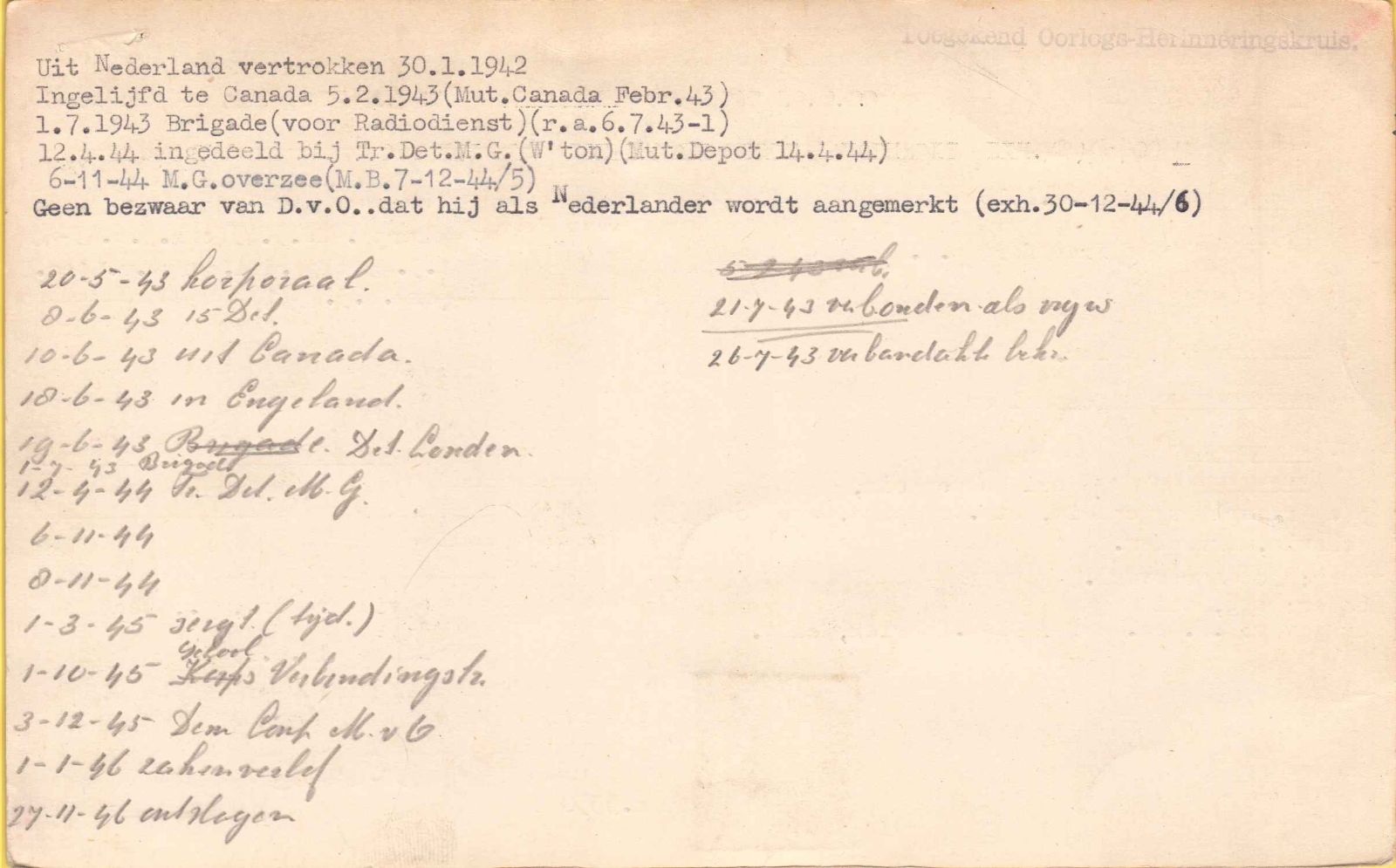
The Princess Irene Brigade landed in Normandy in August 1944. Paul was not with them: his service card keeps him in England with Military Government until 6 November 1944, when he was sent “overzee” — overseas — to the liberated south. On 30 December the War Ministry noted no objection to his being regarded as a Dutchman.
15. Tilburg
November 1944 – May 1945 · Military Government, the liberated south
Military Government ran the liberated provinces below the rivers that winter, from Brabant and Limburg, while Amsterdam and The Hague went hungry under occupation. On 1 March 1945 Paul was made temporary sergeant. Exactly where he was posted the card does not say.
16. The Hague
Summer 1945 · Liberation
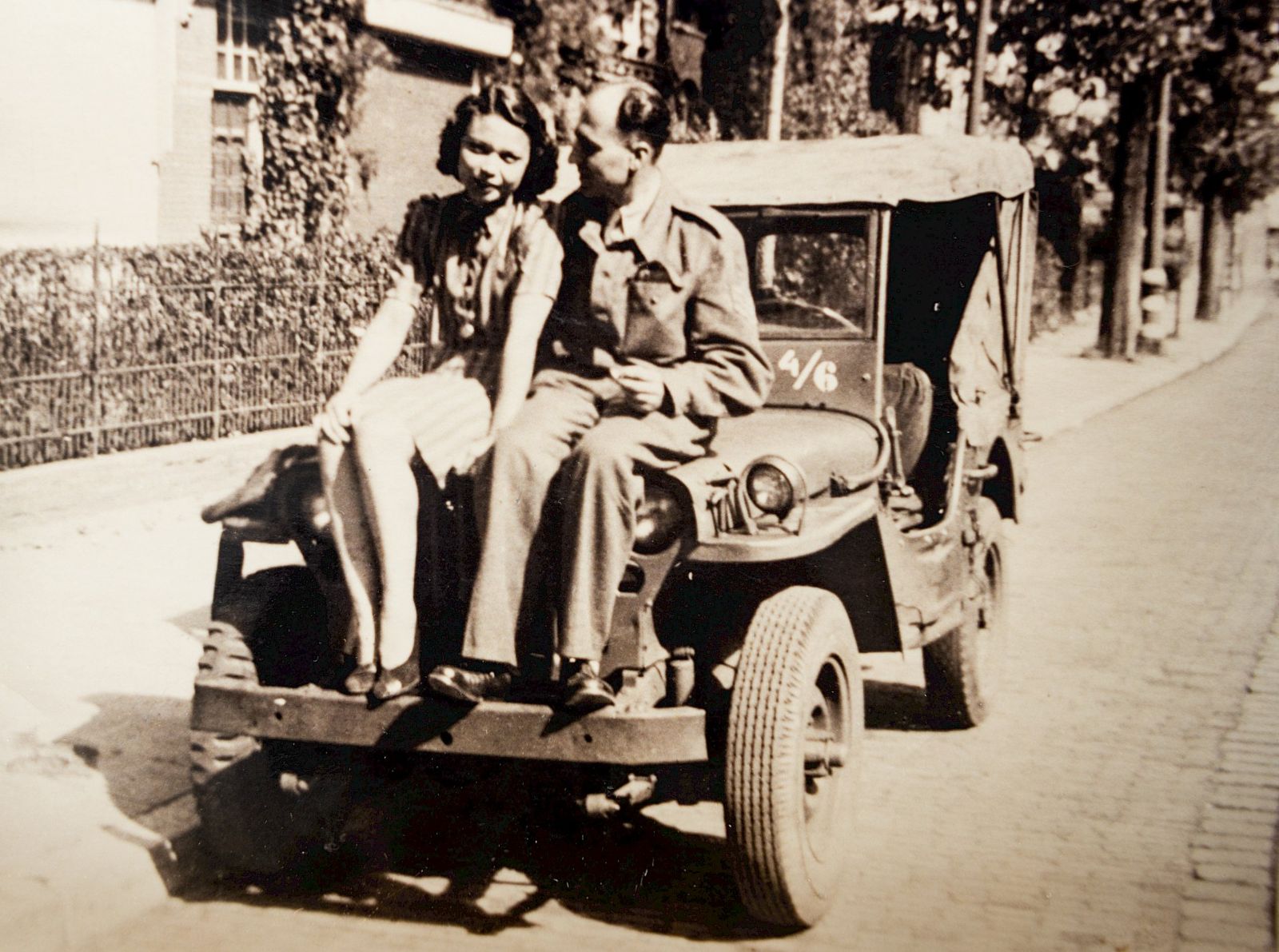
After the German surrender in May 1945 he was in the west of the country. The photograph of Paul and Hetty on the bonnet of a jeep, still in battledress, was most likely taken in The Hague or Scheveningen that summer — the earliest picture of them together.
17. Amsterdam
1945 – 1946 · Return
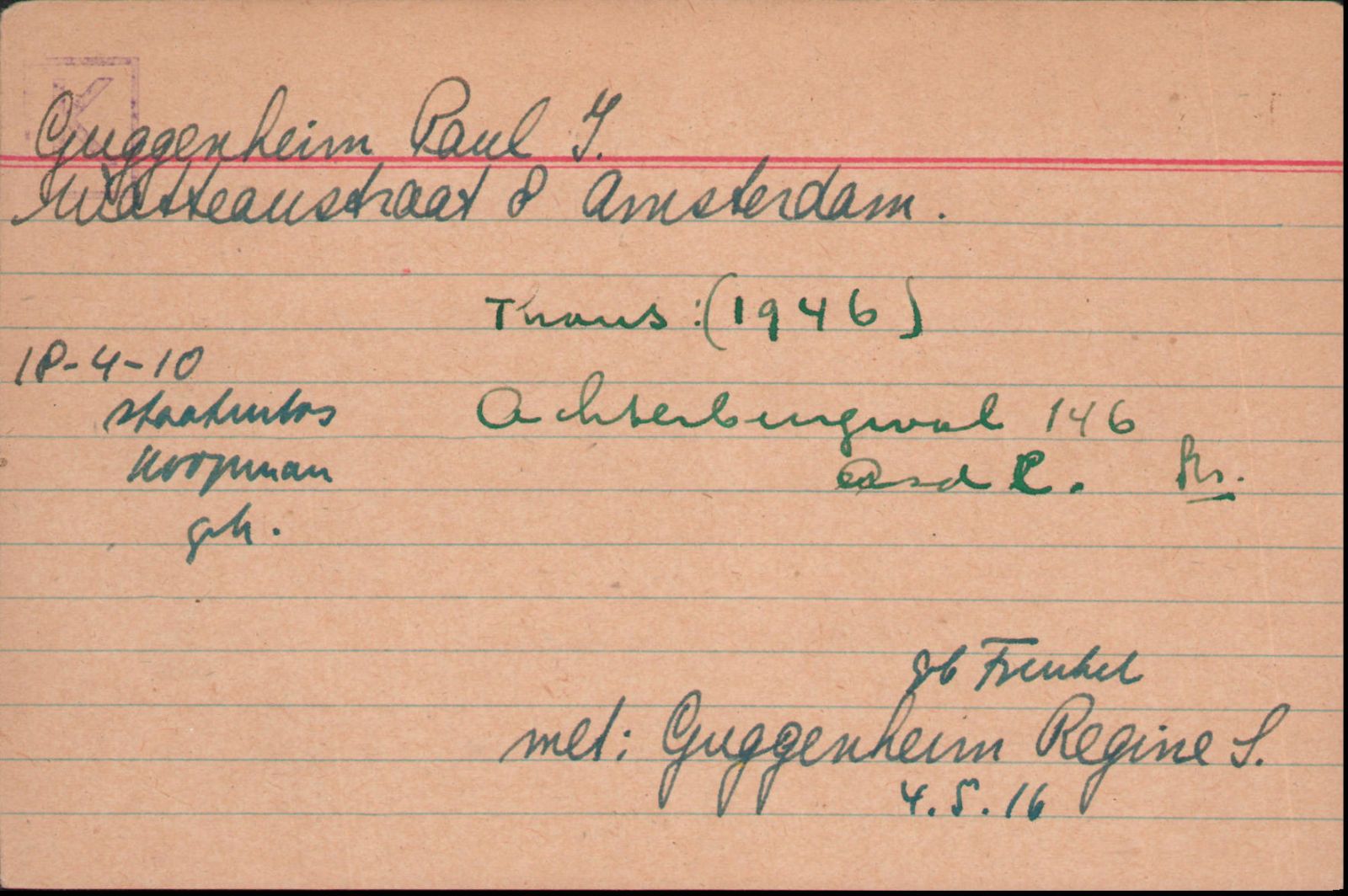
Back at Butonia, O.Z. Achterburgwal 146, living in a pension, his savings blocked and his books and photographs stolen. When his mother died that winter and left him a preferred share “should he be in hardship”, he wrote to Karl declining it. He was discharged from the army on 27 November 1946.
Ich bitte Euch dringend, keinen Gebrauch von der mir zugesagten Bevorzugung zu machen.
I urgently ask you not to make use of the preference promised to me.
Places the letters came from
Jerusalem
1942 – 1946 · Karl, his brother
Karl Guggenheim wrote monthly and numbered every letter so they would know which ones never arrived. In Letter No. 9, of 12 December 1942, he reported what people exchanged out of Nazi Europe had told him: “the complete annihilation of great Jewish communities — a mass murder unimaginable in its scale.”
die völlige Vernichtung grosser jüdischer Gemeinden, ein in seinen Ausmassen unvorstellbarer Massenmord.
the complete annihilation of great Jewish communities — a mass murder unimaginable in its scale.
Petach Tikvah
1942 – 1944 · Rosi, his mother
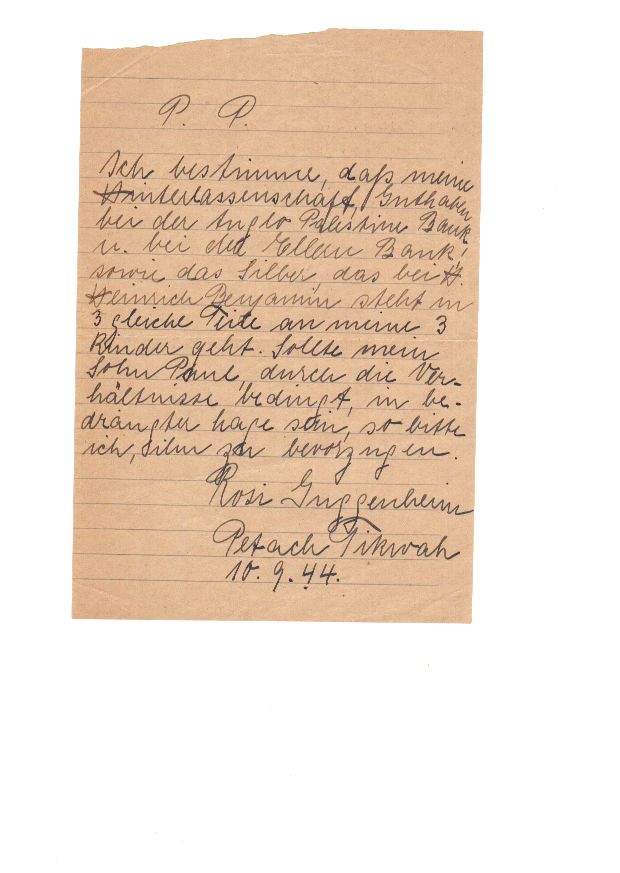
His mother wrote from Palestine, where she lived dependent on her children. On 10 September 1944 she set down a will: her savings at the Anglo-Palestine Bank and her silver in three equal parts — “should my son Paul be in hardship, I ask that he be favoured.” Her last letter, of 11 October 1945, mourns that she has never had a room of her own.
Sollte mein Sohn Paul bedrängt sein, so bitte ich, ihn zu bevorzugen.
Should my son Paul be in hardship, I ask that he be favoured.
Philadelphia
1942 · Henny, Julius and Gretel
Henny Hirsch wrote on 13 July 1942, while Paul was still behind the wire at Tiscornia: “Now I wish for you that you may come very soon — but above all, that you may get out of the camp.”
Nun wünsche ich Euch, dass Ihr recht bald kommen könnt, aber vor allem aus dem Lager heraus könnt.
Now I wish for you that you may come very soon — but above all, that you may get out of the camp.
Harrogate
1942 – 1943 · The Fränkels, his in-laws
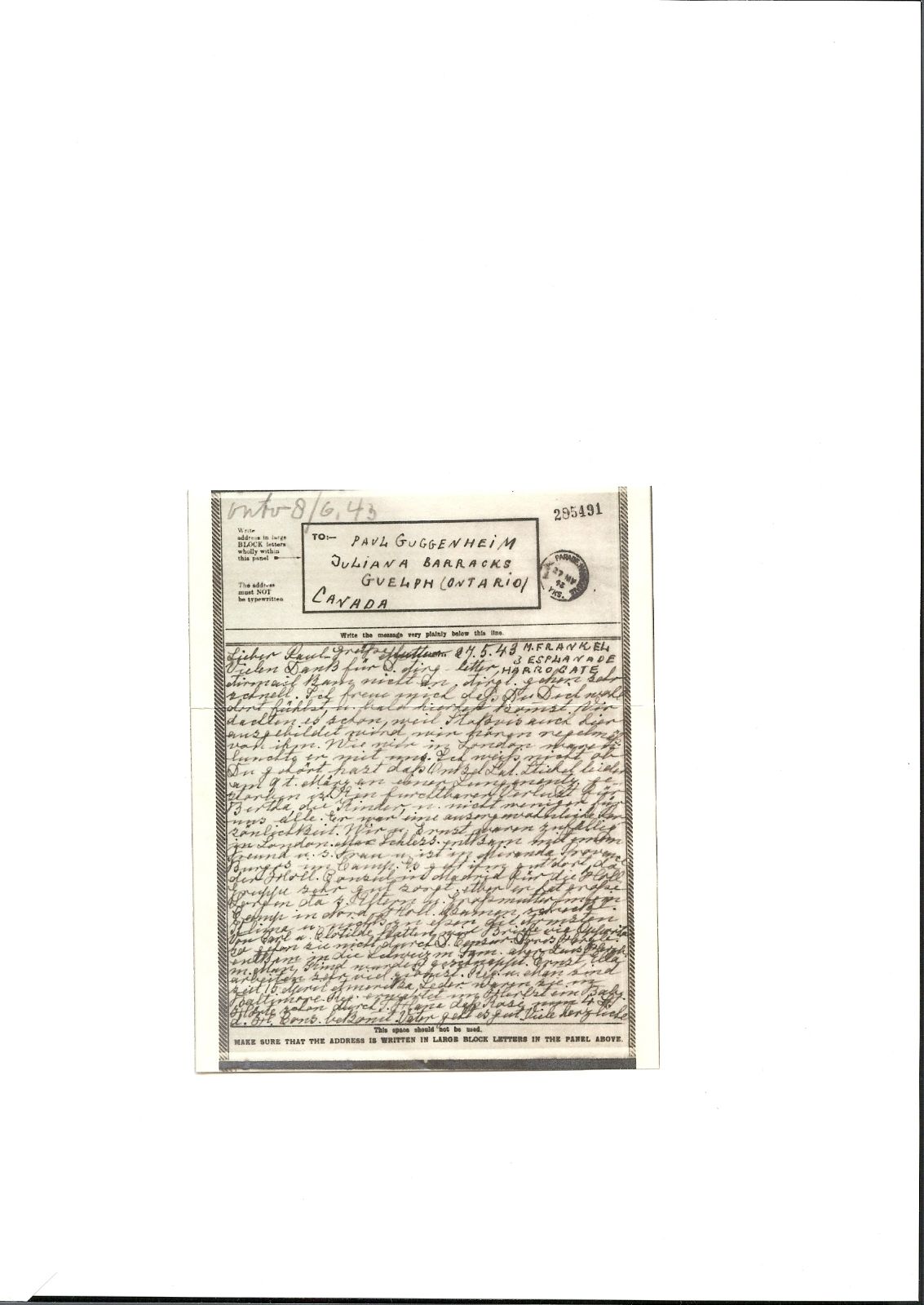
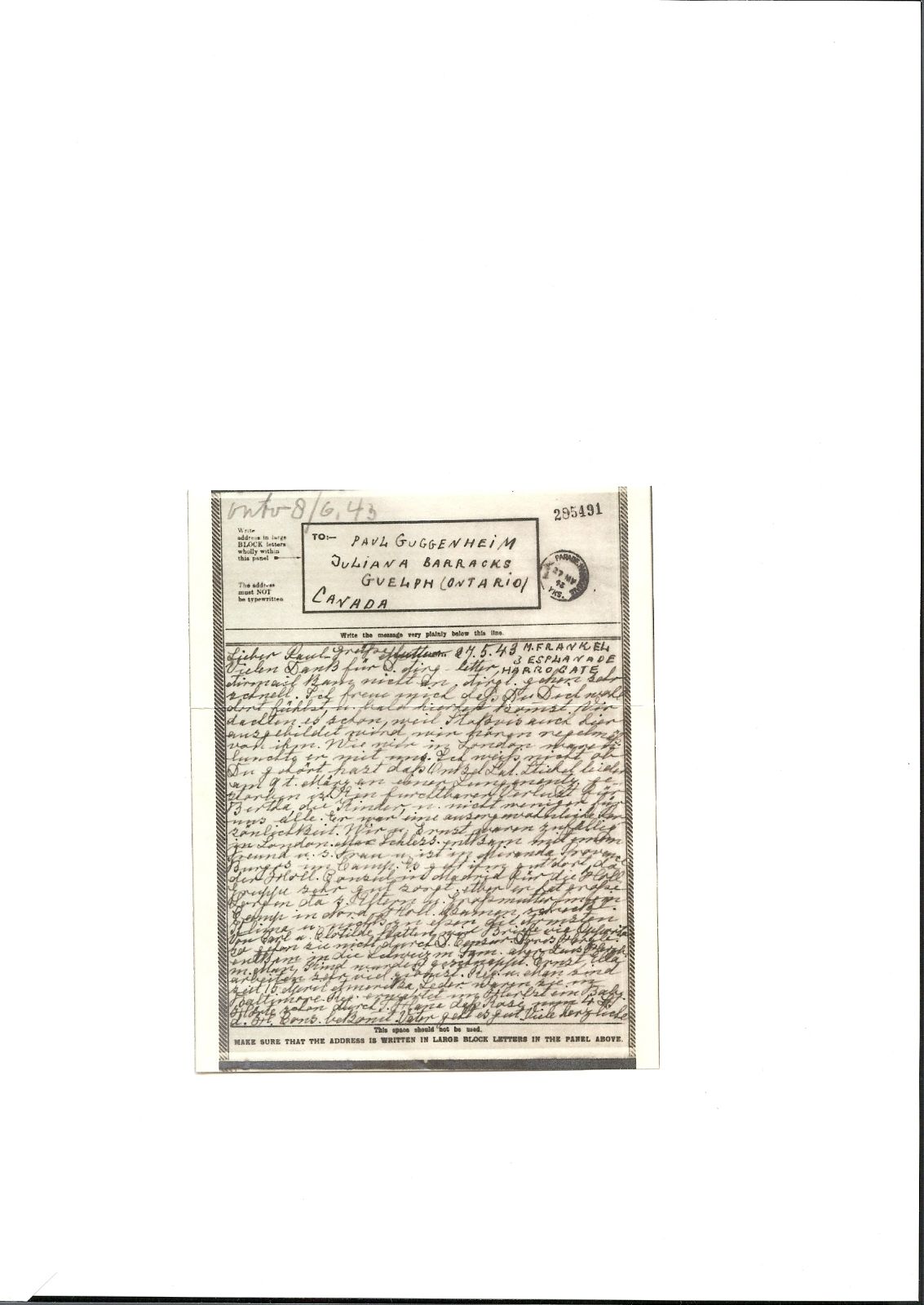
Regine’s family in Yorkshire, with whom Paul conducted the long, bitter correspondence of the divorce settlement. “How one can be so tactless, brutal and mean I do not understand,” he wrote in August 1942. “God preserve me from such an attitude.”
Wie man so taktlos, brutal und gemein sein kann, verstehe ich nicht.
How one can be so tactless, brutal and mean I do not understand.
Zürich
1942 · Butonia
Head office of Butonia A.G., the button firm Paul had run in Amsterdam for his father-in-law. The Zurich management helped obtain the Cuban visas in 1941; after the war, from the same desk on the Achterburgwal, Paul was again writing to Zurich for samples and price lists.
Buenos Aires
November 1942 · Ernesto, a friend
One of the scattered Maccabi friends. Paul wrote to Argentina, to Brazil, to South Africa, to Palestine, to Cuba, to England — keeping a pre-war social world alive by post after the city that held it was gone.
Johannesburg
1942 · Ilse, his sister-in-law
Regine’s sister wrote from South Africa in May 1942. The family that had been one household in Amsterdam was by then spread across four continents, arguing by airmail.